
From 35 People to 600+: How I Reimagined a Community Event
Sometimes the best way to improve an event is to stop doing what you've always done.
Client Snapshot
Organization: Norberry-Glenlee Community Centre, Winnipeg, Manitoba
Event: Annual Knight of Celebration
My Role: Volunteer Board Member and Special Events Director
Starting Point: 35 attendees in 2019
Results: 400+ attendees in 2022; estimated 600+ in 2026
The Problem
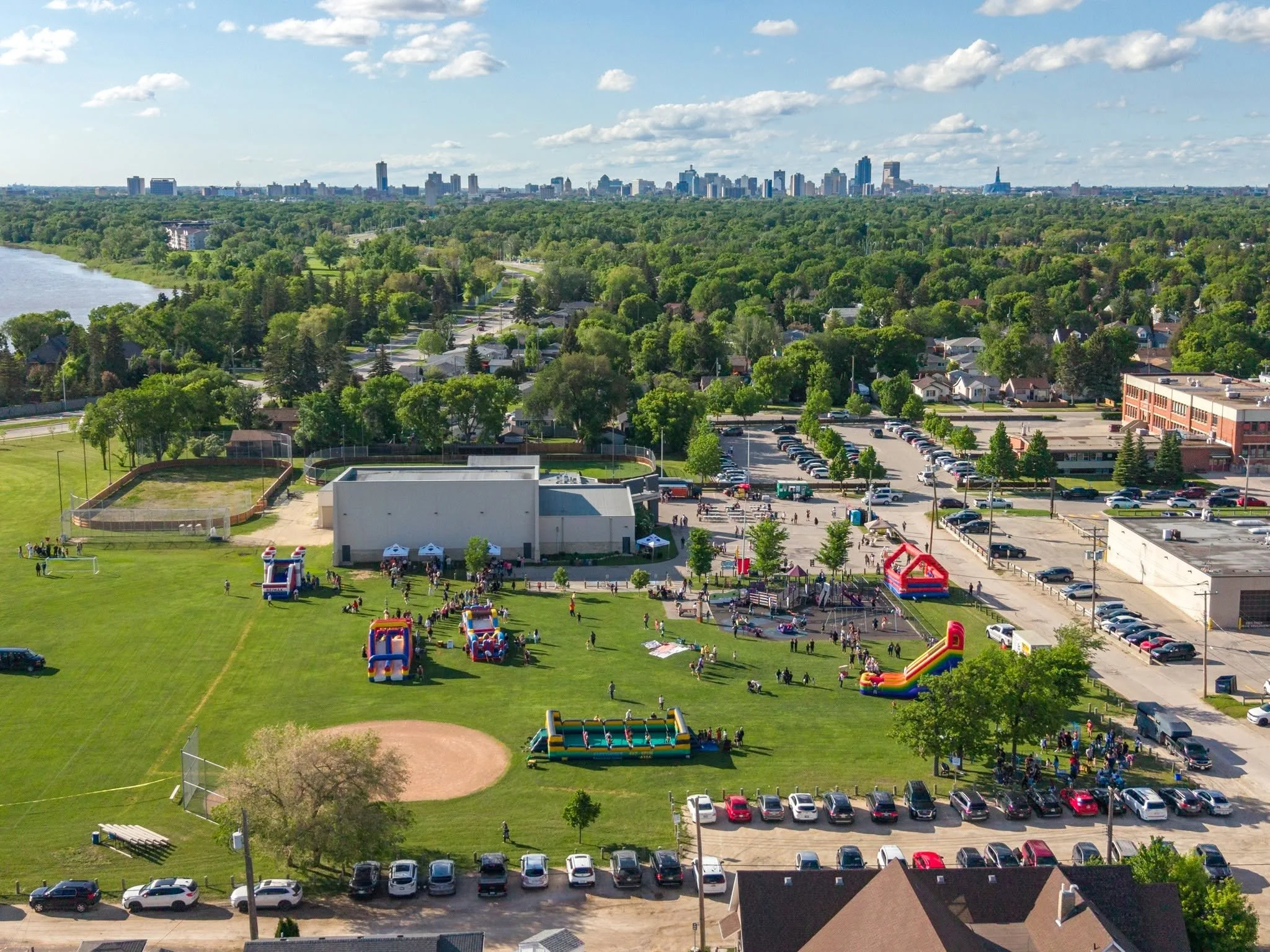
When I joined the board of the Norberry-Glenlee Community Centre, one of the first things they asked me about was their annual community event.
They walked me through what the event had looked like before the pandemic, how it had traditionally been organized, and how many people had attended in 2019.
Thirty-five.
The board knew something needed to change. They were open to new ideas and had already started talking about what they could do differently.
But as I listened, I realized that most of the ideas were variations of the same event.
I didn't think we needed to improve the old format. I thought we needed to get rid of it.
The Hidden Constraint: Doing the same thing and expecting different results
The problem wasn't that people weren't working hard enough or that the event wasn't affordable. It had always been free.
The problem was that the format wasn't giving people a compelling reason to attend.
We were also working within the realities of a volunteer-run community centre. We needed something we could organize with the people, space, and resources available to us.
And we needed to make some decisions about what the event was actually going to be.
There were ideas about adding different elements, including a beer garden. But I didn't think trying to appeal to everyone was the answer.
We needed to decide who the event was for and build the experience around them.
The Shift: Something completely different
I proposed taking the event in a completely different direction.
Move it outside. Put it in the parking lot where people driving by could see it. Get rid of the formal structure and create something families could drop into whenever they wanted.
I wanted people to see something happening at their community centre and think, That looks fun. Let's go check it out.
When the idea of a beer garden came up, I pushed back. We were creating a family event, and I wanted every decision to support that vision.
Rather than adjusting the old event, we were going to create something new.
To the board's credit, they trusted me to take it in that direction.
What We Did Differently
We created an outdoor, family-focused community celebration.
Bouncy castles. Face painting. Balloon animals. A petting zoo. Food. Activities for kids.
No formal program that people needed to arrive on time for. No pressure to participate in anything. Just a welcoming space where families could come and go, spend time together, and enjoy themselves.
The event was still free, but the experience was completely different.
We planned for approximately 250 people.
And then, the day before the event, our food truck cancelled.
What Happened on Event Day
The cancellation was completely understandable. There had been a death in the family.
But it left us with one significant problem: we had one food truck booked, no replacement lined up, and less than 24 hours to figure it out. Fortunately, we'd already planned to give away hot dogs.
So I made a decision - hot dogs were now the food plan.
We posted an update on the community centre's Facebook page so people knew what to expect, and we moved forward. It wasn’t the food experience we’d originally planned but we weren’t going to let it stop the event.
On the day, people started arriving.
And they kept arriving.
Families came with their kids. People driving past saw the activity, pulled into the parking lot, and joined us.
The bouncy castles were busy. Kids were getting their faces painted. Families were walking around, visiting, eating, and enjoying themselves.
And the 250 hot dogs we'd planned to give away? All gone!
We had more people than food, and the event wasn't slowing down.
Staff went out to buy as many pizzas as they could get their hands on, and we gave all those away too.
There wasn't a complicated contingency plan or a committee meeting to decide what to do next. We had hungry people at a community event. We needed to feed them.
So we did.
And the event kept going.
The Result
By the end of the evening, more than 400 people had attended.
We'd gone from 35 attendees in 2019 to a parking lot full of families in 2022.
Everywhere I went, I heard some version of the same thing: "I can't believe this is free!"
But what struck me most wasn't just the number of people that came that night but that they stayed. They weren't coming for a scheduled activity and leaving when it finished. They were spending time together, enjoying the atmosphere, and reconnecting with their community. After the isolation of the pandemic, I think people were ready for exactly that.
And I'll admit something. I spent the next year wondering whether we'd just gotten lucky.
Maybe people were particularly excited to get out after the pandemic. Maybe the weather had been perfect. Maybe we'd happened to hit on the right combination of things at exactly the right time.
But then we did it again. And again.
That first year, in 2022, turned out to be our smallest turnout since the redesign.
Every year since, we've welcomed at least 400 people. In 2026, we estimated more than 600 people came through over the course of the evening.
The event I completely reimagined in 2022 is now an established community tradition.
What This Really Solves
I could tell you this story as an example of how to handle a last-minute vendor cancellation.
And it is. Things go wrong at events all the time. Sometimes you have a backup plan. Sometimes you have to make one up on the spot.
But there's a much bigger lesson here.
When I first joined the board, everyone knew the event needed to change. The question was how much.
We could have changed the entertainment, adjusted the schedule, or added a few new activities. Maybe attendance would have improved.
Instead, we asked a different question: What would make people actually want to come?
That question changed everything.
The food truck cancellation didn't determine whether the event succeeded. Neither did running out of hot dogs.
We'd created an experience people wanted to be part of, and when things went wrong, we found a way to keep it going.
That's the difference between simply organizing an event and thinking strategically about what that event needs to accomplish.
Who This Is For
This approach is for organizations that:
Have been running the same event for years without seeing the results they want
Are struggling with attendance or engagement
Know something needs to change but aren't sure what
Want an experienced perspective on what could work better
Are open to rethinking the event rather than making small adjustments
The Bottom Line
Good event planning isn't just about creating schedules, booking vendors, and checking things off a list.
It's about recognizing when something isn't working, having the confidence to recommend a different approach, and knowing how to execute it.
And when something inevitably goes wrong, it's about making decisions that keep the event moving.
Sometimes the opportunity isn't to improve the event.
It's to rethink it entirely.
Let’s Talk
Is your annual event ready for a fresh perspective?
If your organization has been running the same event year after year, but you're not getting the attendance, engagement, or results you want, you don't necessarily need to work harder.
You might need to look at it differently.
Make It Organized offers Event Audits to help organizations evaluate past events, identify what's working, and find opportunities to create something better.
Let's talk about what's possible for your next event.